
You spend time moisturising your skin, carefully applying your foundation and blending everything until it looks perfect. Then you catch yourself in the mirror a couple of hours later and wonder what on earth happened.
Your foundation has started looking thick and patchy, it’s gathering around your nose, settling into fine lines or clinging to areas of dry skin that you didn’t even realise were there.
Cakey foundation is one of the most frustrating makeup problems, but it doesn’t necessarily mean you’re using a bad foundation. In many cases, the problem comes down to the combination of skincare, foundation, application technique and the amount of product you’re using.
The good news is that a few relatively small changes can make an enormous difference.
What Does Cakey Foundation Actually Mean?
“Cakey” makeup usually describes foundation that looks as though it’s sitting on top of the skin rather than blending naturally into it. Instead of giving you an even complexion, the makeup can look heavy, powdery, cracked or textured.
You may notice foundation collecting around your nose, separating across your forehead or chin, emphasising pores or settling into fine lines. Dry patches can suddenly become much more obvious too.
Some people assume that the answer is simply to buy a more expensive foundation, but even a luxury product can look cakey if too much is applied or if the skin underneath hasn’t been prepared properly.
1. Your Skin May Be Too Dry
One of the biggest causes of cakey-looking foundation is dehydration or dry skin.
Foundation tends to emphasise texture rather than hide it, so applying it over flaky or very dry areas can make those areas considerably more noticeable. Heavy matte foundations can sometimes make this particularly obvious.
Moisturising before applying makeup can help create a smoother surface, but give your skincare a little time to settle before immediately putting foundation over the top. If your face is still covered in a thick layer of moisturiser when you start applying makeup, the products may not sit together particularly well.
If dryness is a recurring problem, consider using a more hydrating foundation rather than automatically reaching for the most matte formula you can find.
2. You Might Be Using Too Much Foundation
More foundation doesn’t necessarily mean better coverage.
In fact, piling on extra layers is one of the easiest ways to end up with cakey makeup. A thick layer has much more opportunity to settle into pores, lines and textured areas as the day progresses.
Try starting with a small amount and concentrating it around the centre of your face, where many of us need the most coverage. Blend it outwards and then add another small amount only where you actually need it.
This is particularly important with medium-to-full coverage foundations. You may be surprised by how little product you actually need.
3. Your Primer and Foundation Might Not Be Getting Along
Sometimes the individual products are perfectly good, but the combination isn’t.
If your foundation regularly separates, pills or becomes patchy soon after application, experiment with using less primer or even leaving it out completely for a day. That can help you establish whether the primer is contributing to the problem.
A good primer can certainly improve the appearance of makeup, particularly if you’re trying to smooth visible pores or create a more hydrated base, but don’t assume that every foundation needs one.
If you do like using primer, apply a thin layer rather than covering your face in it.
Try e.l.f. Power Grip Primer or NYX Professional Makeup Plump Right Back Primer Serum.
4. You’re Not Giving Your Skincare Time to Settle
If your morning routine involves serum, moisturiser, SPF, primer and foundation one immediately after another, there can be an awful lot sitting on your skin.
You don’t necessarily need to wait half an hour between every stage, but giving your moisturiser and sunscreen a chance to settle can help. Applying foundation while the products underneath are still very wet can sometimes encourage movement and separation.
It’s also worth asking whether you really need every layer you’re applying. A complicated routine isn’t automatically a better routine.
5. You’re Using Too Much Powder
Powder can be brilliant for reducing shine and helping makeup stay in place, but it’s also remarkably easy to overdo.
If your makeup looks great before you powder it and suddenly becomes dry or heavy afterwards, you’ve probably found the culprit.
Instead of applying a thick layer of powder across your entire face, try using a smaller amount only where you tend to become oily. For many people, that’s the forehead, nose and chin.
If you have dry or mature skin, you may find that you need very little powder at all.
6. You’re Trying to Cover Everything With Foundation
Foundation doesn’t have to do all the work.
If you have a blemish, pigmentation or another small area that needs more coverage, repeatedly layering foundation over your entire face can make everything look heavier.
Try using a lighter layer of foundation to even out your complexion and then apply concealer only to the areas that still need additional coverage.
The result can look much more natural while still giving you the coverage you want.
7. Your Foundation May Be Wrong for Your Skin Type
There isn’t one universally perfect foundation because our skin behaves differently.
Someone with oily skin may love a long-wearing matte foundation that somebody with very dry skin finds far too unforgiving. Likewise, an extremely dewy foundation that looks beautiful on dry skin might start sliding around on somebody with a very oily T-zone.
Rather than choosing a foundation purely because it’s popular on TikTok or has thousands of reviews, think about what your own skin actually needs.
Foundations Worth Considering
If you’re looking for alternatives, these are some popular options that could fit naturally into your routine depending on your skin type and preferred finish.
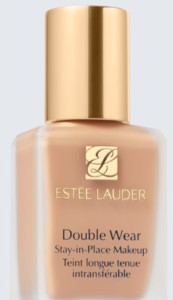
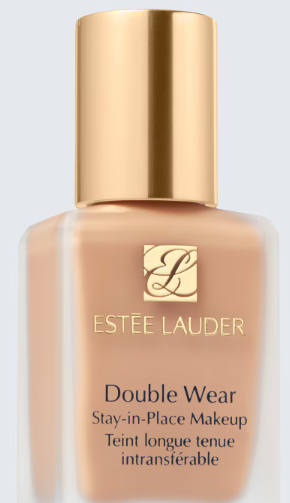
Estée Lauder Double Wear Stay-in-Place Foundation
Double Wear has been a hugely recognisable long-wear foundation for years, although Estée Lauder has now introduced a new formulation. The current version offers buildable medium-to-full coverage with a natural matte finish, and Estée Lauder describes it as non-caking and non-settling while providing both oil control and hydration.
That makes it particularly interesting if you want substantial coverage without automatically applying layer after layer.
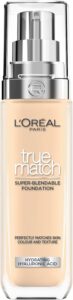
L’Oréal Paris True Match Foundation
True Match is a much more affordable option and remains an extremely popular high-street foundation. It’s worth considering if you prefer something that doesn’t feel like extremely heavy full coverage, particularly for everyday makeup.
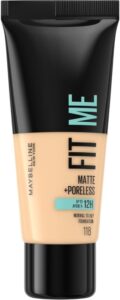
Maybelline’s Fit Me range is another budget-friendly option and is particularly well known for its Matte + Poreless products. If excess oil and visible pores are contributing to your makeup problems, it’s one of the ranges worth looking at without spending premium-foundation money.
Remember, however, that buying a new foundation won’t necessarily cure caking if the real problem is applying too much product or putting it over very dry skin.
8. Your Application Tool Could Be Making a Difference
There’s no universal rule saying you must use a brush, sponge or your fingers to apply foundation. Different foundations — and different faces — respond differently.
A damp makeup sponge can help press foundation into the skin and remove some excess product at the same time, which can be useful if your makeup regularly looks heavy.
A foundation brush can provide excellent coverage, but if you find brush marks or patches appearing, try using the brush to distribute the product and then gently pressing over the finished foundation with a damp sponge.
You don’t need to scrub or aggressively buff the skin. The aim is to create a thin, even layer.
9. You’re Applying More Makeup to Fix Makeup
This is an easy trap to fall into.
You notice your foundation starting to look patchy at lunchtime, so you add more foundation. Then you add more powder to set the new foundation. By mid-afternoon, you’ve effectively got several layers of makeup sitting on your face.
Instead, try gently pressing the problem area with a clean sponge first. If necessary, use the tiniest amount of moisturiser or hydrating mist before blending the existing makeup back into the skin.
Only add more foundation if you genuinely need it.
10. You’re Expecting Your Skin to Look Completely Texture-Free
This might be the most important point of all.
Real skin has texture.
We have pores, fine lines, tiny hairs, dry areas, oily areas and imperfections. Foundation can even out colour and disguise some imperfections, but it cannot turn human skin into the completely smooth, filtered faces we regularly see online.
Sometimes makeup looks “cakey” only because we’re examining our faces from a few centimetres away in a magnifying mirror.
Step away from the mirror and look at your makeup from the distance another person would normally see you. You may discover that it looks considerably better than you thought.
How to Fix Cakey Foundation Without Starting Again
If your foundation becomes cakey halfway through the day, you don’t necessarily need to wash everything off.
Start by avoiding the temptation to immediately add another layer of powder. Take a clean makeup sponge and gently press over the areas where foundation has begun collecting or separating. This can redistribute some of the existing product and lift away excess makeup.
If the area is particularly dry, a very small amount of hydrating mist can sometimes make the makeup easier to blend again. The important thing is to use as little additional product as possible.
A Simple Anti-Caking Makeup Routine
If cakey foundation is a regular problem, try simplifying your routine for a few days.
Start with clean skin and apply an appropriate moisturiser followed by your usual SPF. Allow those products to settle, then use a small amount of primer only if you genuinely find that it improves your makeup.
Apply a thin layer of foundation and blend it well before deciding whether you need more. Use concealer on individual areas rather than building another complete layer of foundation, and finish with a small amount of powder only where it’s actually needed.
The objective isn’t to create thicker makeup. It’s to create better placed makeup.
Is Expensive Foundation Less Likely to Cake?
Not necessarily.
Premium foundations can have beautiful formulas, but spending £40 on a bottle doesn’t guarantee that it will suit your particular skin. Equally, an inexpensive foundation can look fantastic when it suits your skin type and is applied well.
For example, the newly reformulated Estée Lauder Double Wear is designed as a premium long-wearing, buildable foundation, whereas products such as L’Oréal True Match and Maybelline Fit Me give shoppers much cheaper alternatives.
The best foundation is ultimately the one that works with your skin, your preferred coverage and your routine.
Final Thoughts
Cakey foundation is frustrating, but throwing your current makeup away probably shouldn’t be your first solution. Start by looking at how much foundation and powder you’re using, whether your skin is properly moisturised, and whether all of the products underneath your foundation are actually helping.
A thin layer of well-blended foundation will often look considerably better than several layers designed to hide every tiny imperfection.
And remember that makeup is being applied to real skin, not an Instagram filter. A few visible pores and fine lines don’t mean you’ve done your makeup badly.
Sometimes the best way to stop foundation looking cakey is simply to use less of it.